



APP Fraud Landing Page Case Study
Providing a real-time customer liveness check that allows you to check which mobile numbers are no longer active
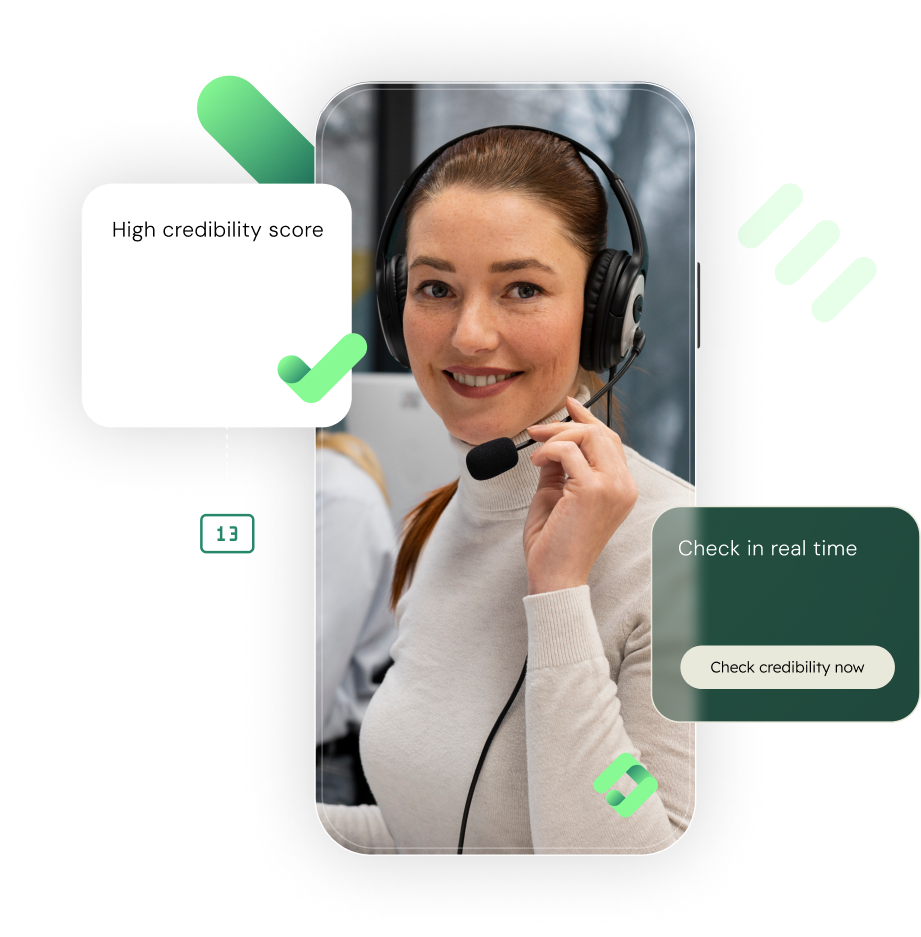
Rread case study >Detect authorised push payment fraud using real-time mobile scam signals. Add situational mobile insights at the moment of transfer to spot scam patterns earlier and protect customers with less friction. APP losses have been material in the UK, with £459.7m reported lost to APP scams in 2023.

Detect coercion, not just anomalies
When a customer is being coached, the context around the transaction can be more revealing than the transaction alone.
Reduce unnecessary friction
Use stronger interventions only when scam signals suggest elevated risk, keeping genuine customers moving.
Improve operational outcomes
Prioritise the right cases for intervention and review, reducing wasted effort and speeding up response where it matters.

Mobile network insights, used alongside your existing fraud controls, have been shown to reduce APP fraud rates by up to 25%. What you can detect with scam signals:
Whether the customer is on a call at the time of the transaction
Whether the call is inbound or outbound
How long the call has lasted
These insights help teams detect suspicious patterns consistent with APP scams before funds are sent or settled.

Designed for organisations where payment trust is critical, including:
Banks and building societies
Payment service providers and fintechs
Organisations running high-risk payment flows
Fraud operations teams managing APP disputes and reimbursement exposure

Authorised Push Payment fraud relies on social engineering, often creating urgency or impersonating a trusted organisation to convince victims to send money willingly. That makes APP scams harder to detect than technical account takeover, because the user is actively participating.

Payments, payee changes, first-time beneficiaries, unusually large transfers or rapid repeat activity.

Situational insights can indicate whether the customer is currently on a call, the call direction and call duration to help identify patterns consistent with social engineering scams.

Allow the transaction, present an in-app warning, trigger step-up authentication, hold for review or route to a specialist queue.
Providing a real-time customer liveness check that allows you to check which mobile numbers are no longer active
Rread case study >
A social engineering scam where the victim is deceived into authorising a real-time payment to a fraudster.
Because the customer authorises the transfer, so the transaction can look legitimate to many traditional controls.
No. It adds an additional layer of context that strengthens decisioning alongside your current rules, behavioural signals and payment controls.
"Phone number verification plays a critical role in helping to detect and prevent online fraud. TMT ID’s TeleShield product provides easy access to global mobile data, enabling us to enhance the actionable results of our MaxMind minFraud® services."

"BTS (Business Telecommunications Services) is successfully using TMT’s Velocity and Live services to check the status of mobile numbers. This way we make sure we optimize the performance of the service offered to our customers and ensure the quality of terminating traffic to all countries.”

"LATRO relies on TMT’s TeleShield to provide the most up to date and reliable numbering qualification information within our fraud reporting tools, enabling us to protect our customer’s revenues and empowering them to defend themselves against fraudulent numbers."

"TMT is a valued partner that enables us to manage our routing costs effectively. They proactively and continuously expand their operator and country coverage while delivering exceptional customer service. We can always count on them to achieve high-quality results and look forward to our continued collaboration."

"TMT provides us with the most comprehensive numbering intelligence data through their fast and reliable Velocity and Live services. TMT is a trusted partner for us, their products ensure that we continue to optimise the best performance and service to our customers."

"TeleShield from TMT gives 42com the power to detect and target telephony fraud scams internationally, thereby protecting our company from the financial and customer experience impacts of telecommunications fraud."

"It has been a pleasure to work with the team at TMT. They have become an essential provider of accurate numbering data information and Number Portability services globally."

"Deutsche Telekom Global Carrier uses TMT ID as one of their key suppliers for Mobile Number Portability Data services. Deutsche Telekom Global Carrier uses TMT ID’s Velocity MNP solution. This is an ultra-fast query service that optimises the routing of international voice calls and A2P messaging."

We provide the most comprehensive device, network and mobile numbering data available