



Telephony Fraud Landing Page Case Study
Providing a real-time customer liveness check that allows you to check which mobile numbers are no longer active
Rread case study >Detect and prevent telephony-based fraud in real time without damaging customer experience. Our trusted mobile network signals and intelligent risk scoring to detects fraud patterns early and protect your platform or services
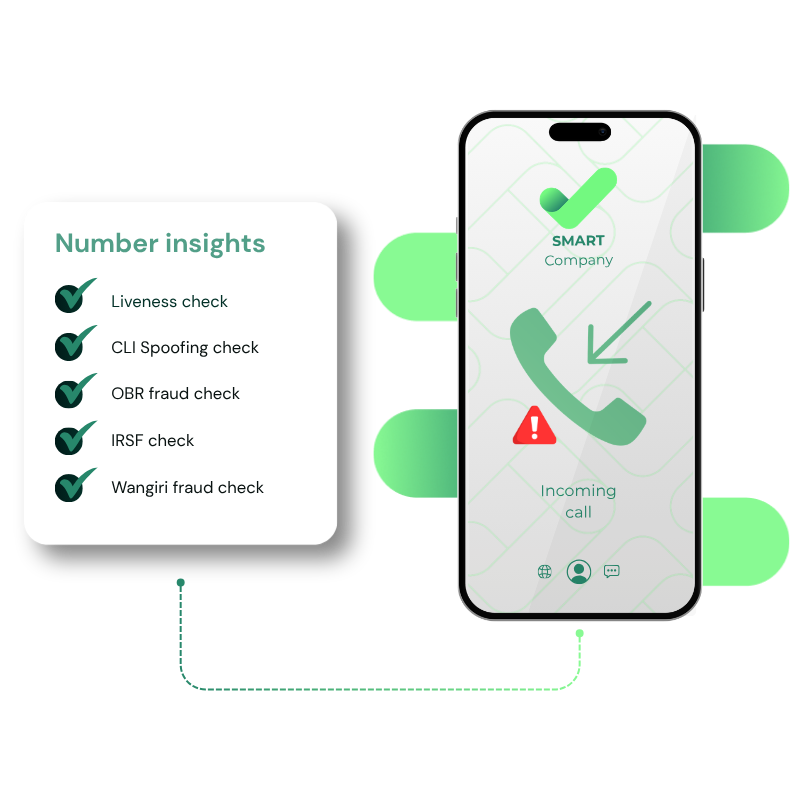

Detect spoofed or high-risk calls & SMS
TMT ID identifies numbers that are likely to be used in fraud, spam or impersonation so you can block or challenge them
Protect verification & alert channels
When SMS and calls are used for authentication or alerts, fraud can erode trust. Smart risk signalling helps validate sources and protect user access
Improve customer confidence & satisfaction
Genuine users receive reliable voice and messaging services while fraud attempts are reduced, boosting trust and reducing support strain

Our telephony risk signals go beyond static lists or reputation blacklists. They use dynamic mobile network data that reflects real-world usage patterns
Mobile credibility scoring
Every mobile number receives a credibility score based on current and historical network attributes to help predict risk
Detect recycled or suspicious numbers
Numbers that have been reassigned or associated with misuse can be flagged and handled appropriately to reduce fraud exposure
Adaptive & accurate risk insight
Mobile network signals evolve over time to reflect changing behaviour and threat patterns so you stay ahead of fraud trends

This telephony fraud tool is ideal for organisations that depend on secure messaging, calls and identity workflows:
Financial services and regulated providers
Communication and Service Providers
Mobile Messaging Providers / Aggregators
Platforms using voice or SMS for login or verification codes
Utility and essential service providers
Online marketplaces and digital platforms
Organisations combating impersonation or scam attacks
Whether your users rely on telephony for access, alerts or communication, protecting those channels helps protect your business

Our API integrates with your current systems so you don’t need to rebuild everything
Flexible integration options
Works alongside existing fraud and messaging systems
Enhances alerting, verification and risk decision workflows
Ensure stronger telephony integrity while maintaining your existing infrastructure


A voice call or SMS triggers a telephony event for verification, alerts or service notifications

Mobile network intelligence checks number credibility, device reputation and risk indicators before delivery or acceptance

Suspicious activity is identified in real time and blocked or routed to further checks, while genuine communications proceed smoothly
Providing a real-time customer liveness check that allows you to check which mobile numbers are no longer active
Rread case study >
No. Telephony risk checks run in real time with minimal impact on genuine communications
Yes. By identifying high-risk and suspicious numbers early, you can reduce fraud before it reaches users
No. It enhances your existing tools by adding mobile network-derived risk signals to your decision making
"Phone number verification plays a critical role in helping to detect and prevent online fraud. TMT ID’s TeleShield product provides easy access to global mobile data, enabling us to enhance the actionable results of our MaxMind minFraud® services."

"BTS (Business Telecommunications Services) is successfully using TMT’s Velocity and Live services to check the status of mobile numbers. This way we make sure we optimize the performance of the service offered to our customers and ensure the quality of terminating traffic to all countries.”

"We have had a long-standing and successful relationship with TMT ID. Our strategic partnership advances both companies’ mobile fraud solutions in a way that is truly unique in the market."

"LATRO relies on TMT’s TeleShield to provide the most up to date and reliable numbering qualification information within our fraud reporting tools, enabling us to protect our customer’s revenues and empowering them to defend themselves against fraudulent numbers."

"TMT is a valued partner that enables us to manage our routing costs effectively. They proactively and continuously expand their operator and country coverage while delivering exceptional customer service. We can always count on them to achieve high-quality results and look forward to our continued collaboration."

"TMT provides us with the most comprehensive numbering intelligence data through their fast and reliable Velocity and Live services. TMT is a trusted partner for us, their products ensure that we continue to optimise the best performance and service to our customers."

"TeleShield from TMT gives 42com the power to detect and target telephony fraud scams internationally, thereby protecting our company from the financial and customer experience impacts of telecommunications fraud."

"It has been a pleasure to work with the team at TMT. They have become an essential provider of accurate numbering data information and Number Portability services globally."

"Deutsche Telekom Global Carrier uses TMT ID as one of their key suppliers for Mobile Number Portability Data services. Deutsche Telekom Global Carrier uses TMT ID’s Velocity MNP solution. This is an ultra-fast query service that optimises the routing of international voice calls and A2P messaging."